In Tambaksari, a subdistrict of Surabaya, Indonesia, more and more people are choosing long-term contraception. That growing interest signals that residents are ready to make informed decisions about their reproductive health - and it raises a pressing question for the city: is the health system ready to keep up?
Demand That Needs a System Behind It
Nizmawati, a Family Planning Field Extension Officer (PKB/PLKB) in Tambaksari, has watched community members embrace Long-Term Contraceptive Methods (LTCMs) with real enthusiasm. She sees that interest as an opportunity, but one that only pays off if it is backed by dependable services, skilled health workers, well-equipped facilities, accurate data, and financing that lasts.
Her perspective mirrors a wider priority for the Surabaya City Government: converting community demand for LTCMs into Family Planning and Reproductive Health (FPRH) services that are stronger and more responsive.
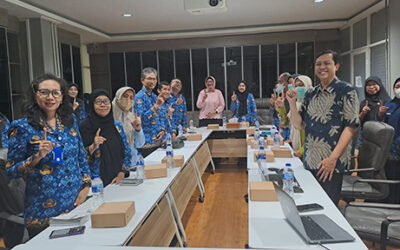
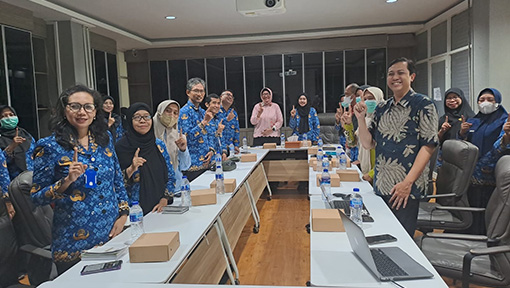
At a coordination meeting on strengthening the FPRH program, drg. Bisukma Kurniawati, M.Kes., Expert Staff to the Mayor of Surabaya for Community and Human Resources Affairs, and Emma Agustina, Head of the Population Control and Family Planning Division at the city's Population Control, Women's Empowerment, Child Protection, and Family Planning Agency (DP3APPKB), both stressed that high public interest must be met by a service system prepared to respond.
"The interest of the people of Surabaya in using long-term contraceptive methods is already very high. Our main focus now is to ensure the readiness of the health service system, strengthen facilities, ensure sustainable budget allocation, and optimize data so that community needs can be met with quality," Bisukma said.
Strengthening What Already Exists
This work is part of an FPRH program developed with the Surabaya City Government through The Challenge Initiative. Led by WHGI, The Challenge Initiative (TCI) is implemented in Indonesia by the Jalin Foundation. Surabaya and Depok were chosen as the first two Indonesian cities to take part, and since then Surabaya has moved through several stages: a landscape analysis, Collaborative Program Co-Design, capacity strengthening for mentors, and preparation for implementation.
Under its Business Unusual approach, TCI works alongside the Ministry of Population and Family Development/National Population and Family Planning Board (Kemendukbangga/BKKBN) without creating a parallel program or taking over government functions. Its support is aimed at reinforcing existing systems through coaching, capacity building, data-driven decision-making, and better use of resources the city already has. TCI does not directly pay for medical procedures; instead, it helps local governments build the capacity to run their programs more independently and sustainably.
To carry the work forward locally, Surabaya formed a cross-sector Mentor Team that includes DP3APPKB, the Regional Development Planning Agency (Bappeda), the Health Office, and the Association of Family Planning Extension Workers (IPeKB). The team is supporting implementation in five initial intervention subdistricts, Tambaksari among them.
Using a phased Lead-Assist-Observe model, TCI helps the Mentor Team and city government build the skills of health workers and community cadres, make use of data from systems such as SIGA and SIRIKA, and sustain the local government's financial commitment to the program. As that capacity grows, the city is expected to take an increasingly central role in leading and expanding the program.
Measuring Success by Local Capacity
Tambaksari's experience makes one thing clear: meeting high demand for LTCMs takes more than simply offering services. It calls for a ready service system, competent providers, reliable data, coordination across sectors, and sustainable funding. That is why collaboration is central. For TCI, success is not just a count of activities completed - it is the city government's growing ability to plan, deliver, monitor, and improve FPRH programs on its own.
With the Surabaya City Government leading this system-strengthening effort, the program aims to help reduce unmet need for family planning toward Indonesia's national target of 8.5 percent by 2029, while making sure residents can count on FPRH services that keep improving in quality and sustainability.
Why It Matters
The William H. Gates Sr. Institute for Population and Reproductive Health is committed to expanding access to family planning and reproductive health by strengthening the local systems that deliver it. Surabaya's approach reflects that commitment: rather than building something new from outside, it invests in the people, data, and budgets the city already has, so that rising demand for contraception is met with quality care that lasts. As Surabaya and Depok lay the foundation for TCI in Indonesia, their progress offers an evidence-based, locally led model that other cities can learn from.