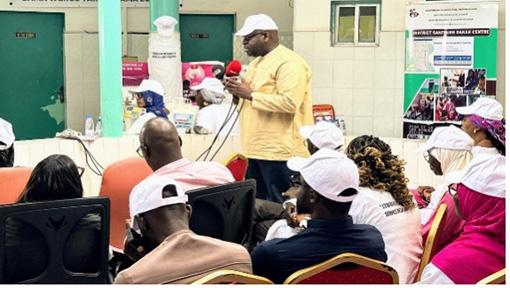
Keeping family planning programs going over the long term depends on more than delivering services. It depends on local leaders who are ready to champion reproductive health, make the case for it, and find the money to pay for it. In Dakar, Senegal, that is exactly what one group of local advocates has done.
A Coalition Built for Local Ownership
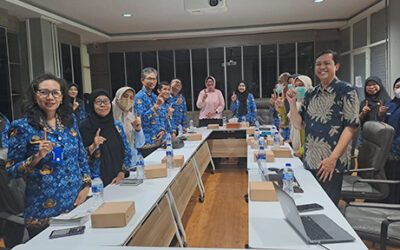
Led by WHGI, The Challenge Initiative (TCI) works through its Francophone West Africa (FWA) hub to help cities take charge of their own family planning programs. As part of that work, the hub supported the creation of City Advocacy and Monitoring Core Groups (AMCGs) - coalitions that bring municipal leaders, health officials, civil society, community representatives, and religious leaders to the same table. Their shared goal is to embed family planning in local priorities and strengthen local ownership of the program.
From Coaching to a Funded Workplan
In Dakar Centre District, the AMCG turned TCI's coaching into results. Members recognized that services would only last if they had a sustainable source of financing, so they sharpened their advocacy skills, cultivated relationships with local partners, and opened a structured dialogue with the private sector.
That effort paid off. Through its Corporate Social Responsibility (CSR) program, Woodside Energy Senegal committed nearly USD 10,000 - enough to fully cover the district's quarterly family planning workplan.
"At Woodside, we believe that local partnerships are essential to sustainably strengthening community health services," said Ousseynou Diakhate, Director of Institutional Affairs at Woodside Energy Senegal.
The funds will pay for a wide range of activities: community outreach and social mobilization, home visits, community monitoring, free Family Planning Service Days, maternal kits for vulnerable women, cervical cancer screening, and HPV prevention services, including vaccination for girls ages 9 to 14.
Sustainability That Does Not Depend on Outside Donors
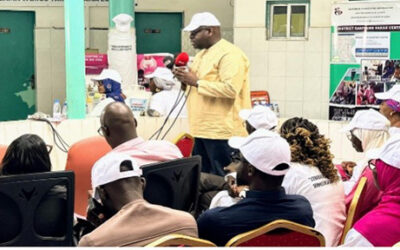
The partnership was formally launched at a ceremony attended by local authorities, community leaders, representatives of Woodside Energy, district health teams, and TCI's FWA team. Speakers credited TCI as the catalyst behind the achievement, pointing to its coaching model, ongoing technical assistance, and long-term commitment to building local advocacy capacity.
The Dakar experience shows that good advocacy goes beyond persuading decision-makers. Its real value lies in preparing local actors to build strategic partnerships and mobilize domestic resources, so that essential health services continue regardless of shifts in external funding.
As the president of the AMCG in Dakar City District put it: "The power of partnership for maternal and child health guided our advocacy efforts."
Why It Matters
At the William H. Gates Sr. Institute for Population and Reproductive Health, we believe lasting access to family planning comes from strong local health systems led by the people who run them. Dakar Centre's success is a clear example of that approach in action: a locally led coalition, equipped with evidence and advocacy skills, securing domestic resources to protect contraceptive access and women's health. At a moment when international aid for family planning is shrinking, models like this one offer a practical, sustainable path for cities to keep services within reach of the women and families who depend on them.