WHGI Research Area
Abortion & Reproductive Rights
Generating stronger evidence on abortion access, safety, and quality of care
WHGI has helped improve how abortion is measured in low-resource settings, generating stronger evidence on abortion access, safety, and quality of care.
What We Study
This research area focuses on abortion as a critical reproductive health issue globally—particularly in low-resource settings where legal restrictions, stigma, and limited access to quality services continue to shape how women access abortion care.
Led by researcher Dr. Suzanne Bell, the William H. Gates Sr. Institute for Population and Reproductive Health's (WHGI) main contribution has been developing approaches that capture abortions that are often missed by clinic- or hospital-based data. This innovation is especially important in a rapidly changing abortion landscape, where increasing use of medication abortion outside formal healthcare means that facility data capture a smaller share of abortions.
Building on social network-based measurement approaches, WHGI researchers have refined and scaled a third-party reporting method that asks women not only about their own experiences, but also about those of a close female friend. This produces more realistic estimates in settings where abortion is stigmatized or legally restricted and women are reluctant to report their own experience.
In collaboration with Performance Monitoring for Action (PMA) partner institutions across six countries, WHGI has also pioneered the connection of women’s experiences to the actual availability and quality of services. WHGI has done this by measuring both the method used and the source of care, while linking these data to evidence on service availability and readiness.
Why it Matters
This work matters because it reveals how access to safe abortion care is shaped by deep inequities in health systems and society. WHGI’s research shows that abortion is more common, and abortion safety more complex, than standard data sources suggest.
Many women navigate long and complicated pathways to care, often trying multiple methods before reaching a safe or effective option.
These challenges are not experienced equally. Adolescents, rural women, women with lower levels of education, and others facing social and economic marginalization are significantly more likely to rely on unsafe methods and less likely to access timely, quality postabortion care.
In many settings, pharmacies and other informal providers help fill critical gaps in access to medication abortion. However, WHGI-led research has found that the quality of information and care women receive through these channels is highly uneven, including incorrect dosages and inadequate counseling.
Together, these findings highlight how abortion care is unevenly distributed across populations and geographies, and they provide evidence to guide policies and programs that expand equitable access to safe, timely, and high-quality abortion and postabortion care.
What Comes Next
Building on this foundation, WHGI aims to expand its work on abortion measurement, safety, and policy impact in settings where abortion remains stigmatized and difficult to measure.
Priorities for future research include refining population-based approaches and applying modeling to existing data to generate more accurate estimates of abortion incidence and safety; assessing the quality of self-managed abortion and identifying strategies to make safe, effective options more widely available; and evaluating how legal reform may affect maternal morbidity and mortality.
Together, these priorities would strengthen the evidence base needed to guide policy and programs as abortion care continues to evolve.

Key Resources & Publications in This Area
Social Network Involvement in Abortion Care-Seeking and Abortion Outcomes among a Population-Based Sample of Nigerian Women Who Had Abortions
Birth certificate measures of maternal morbidity and their limits in abortion policy research
Quality of care offered by health care retail markets for medication abortion self-management: Findings from states in Nigeria and India
Close female friendships and knowledge of recommended abortion methods in Nigeria and the Democratic Republic of the Congo among a representative sample of reproductive-aged women
Exploring women’s knowledge of abortion legality and association with source of abortion care using population-based survey data in Côte d’Ivoire and Ghana
Knowledge of abortion legality among health facility staff in Ghana
Abortion information-seeking experiences among women who obtained abortions in Kinshasa, DRC: Results from a qualitative study
Postabortion care service availability, readiness, and access in Burkina Faso: results from linked female-facility cross-sectional data
Meet the WHGI Research Team
Professor and WHGI Research Director
Caroline Moreau is Professor at the Johns Hopkins Bloomberg School of Public Health, Senior Researcher at the French National Institute of Health and Medical Research (INSERM), and Research Director at the William H. Gates Sr. Institute for Population and Reproductive Health. Her work examines how gender, social class, race, and other forms of social inequality shape sexual and reproductive health across the life course.

Assistant Professor
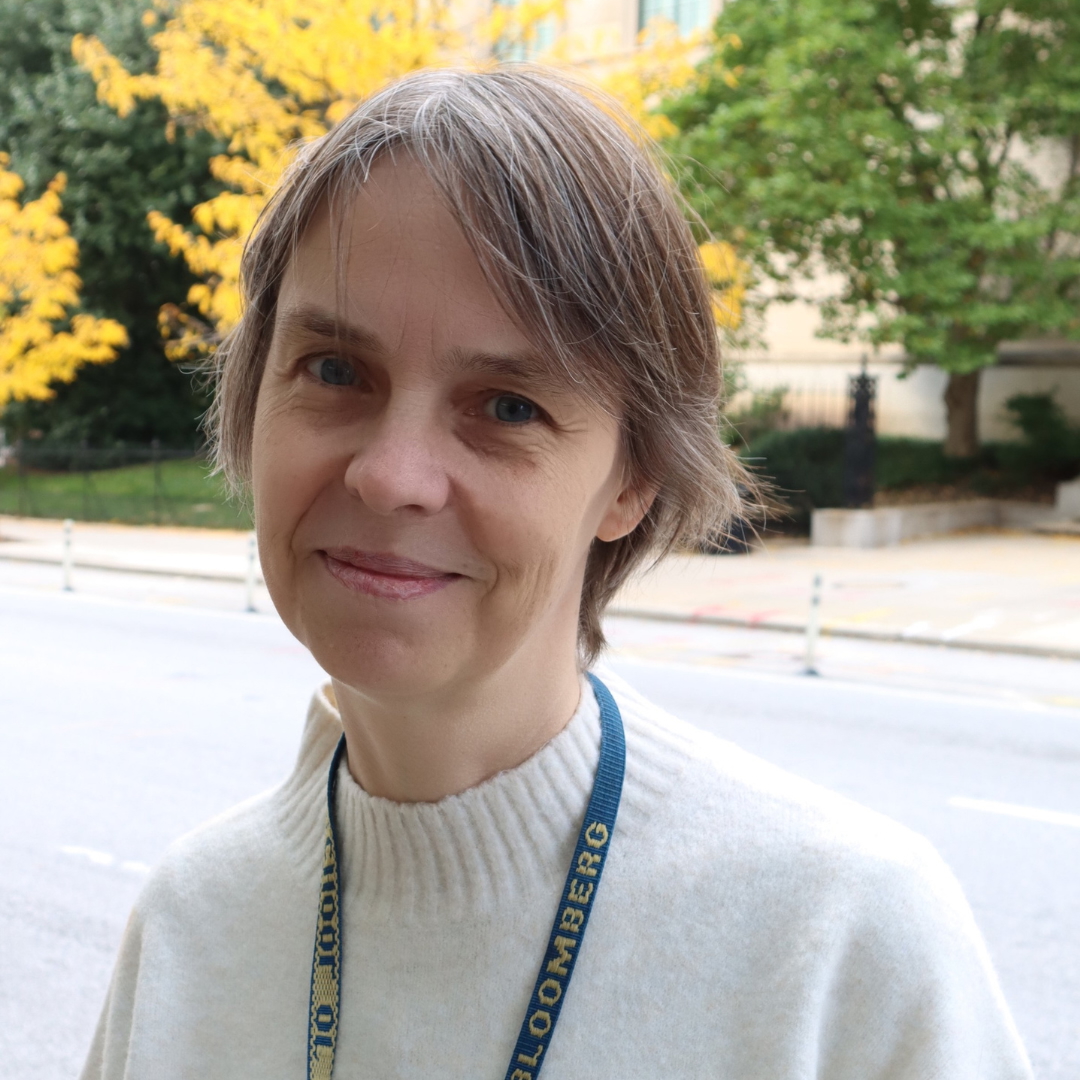
Suzanne Bell, PhD, MPH, is an Assistant Professor in the Department of Population, Family and Reproductive Health at the Johns Hopkins University Bloomberg School of Public Health, where she received her PhD with a focus in demography.
Assistant Professor
Suzanne Bell, PhD, MPH, is an Assistant Professor in the Department of Population, Family and Reproductive Health at the Johns Hopkins University Bloomberg School of Public Health, where she received her PhD with a focus in demography.
In addition to the above WHGI team members, the below individuals have contributed to this WHGI research area:
By the Numbers
Countries
WHGI is involved in research activities related to abortion and reproductive rights in eight countries across Africa and Asia: Burkina Faso, Côte d’Ivoire, Democratic Republic of Congo, India, Kenya, Niger, Nigeria, and Uganda.
Years of Data
So far, WHGI has compiled four years worth of data—from 2018 to 2022—related to abortion and reproductive rights.
News on Abortion & Reproductive Rights
New WHGI Research Links Abortion Bans to Increases in Deaths During and After Pregnancy
A study co-led by WHGI faculty links US abortion bands to a 9.2% rise in pregnancy-associated deaths.
New Resource: Abortion Bans and Public Health Policy Brief
WHGI’s new advocacy brief shows how state legislators use research, data, and storytelling to protect reproductive rights. Read and take action.
Join Us: Symposium on the Public Health Impact of Abortion Bans
Join the Hopkins Population Center, State Innovation Exchange, Population Reference Bureau, and William H. Gates Sr. Institute for Population and Reproductive Health for a symposium exploring the public health impacts of abortion bans through new research and clinical insights.
Want to know more?
Connect with Us
Learn more about WHGI's abortion and reproductive rights work, access available data and publications, or connect with researchers to explore opportunities for collaboration.
Please send an email to gatesinstitute@jhu.edu with the subject line "Abortion Research."