Global Partnerships & Platforms
Performance Monitoring for Action
Measuring Performance. Informing Policy. Empowering Communities.
Performance Monitoring for Action
PMA uses innovative mobile technology that supports high-quality, rapid-turnaround surveys, monitoring key health and development indicators on an annual basis and generating unique data to inform health policy and programming that better meets the needs of women and their families. The program is implemented by local universities and research organizations in nine countries, deploying a cadre of female resident data collectors trained in mobile data collection.
While having a core family planning focus, the data collection platform can be used for data collection that informs other health strategies.
To date, the platform has been used to collect data for guiding programs in abortion, COVID-19, maternal and child health, nutrition, water and sanitation, neglected tropical diseases, women’s and girls’ empowerment, schistosomiasis, and primary health care.
PMA is implemented in nine countries in Africa and Asia. In each country, the surveys are implemented by local universities and research organizations, simultaneously building capacity of country partners.
In Ethiopia however, the PMA project operates under a separate grant and has a different scope and set of program objectives. The PMA Ethiopia project is a survey project designed to generate data on a variety of reproductive, maternal, and newborn health (RMNH) indicators that can inform national and regional governments. The project implements cross-sectional and cohort surveys to fill a data gap—collecting information not currently measured by other large-scale surveys with a focus on measuring RMNH comprehensiveness of care services, and the barriers and facilitators to such care.
Featured Resource from PMA

Connected Global Program
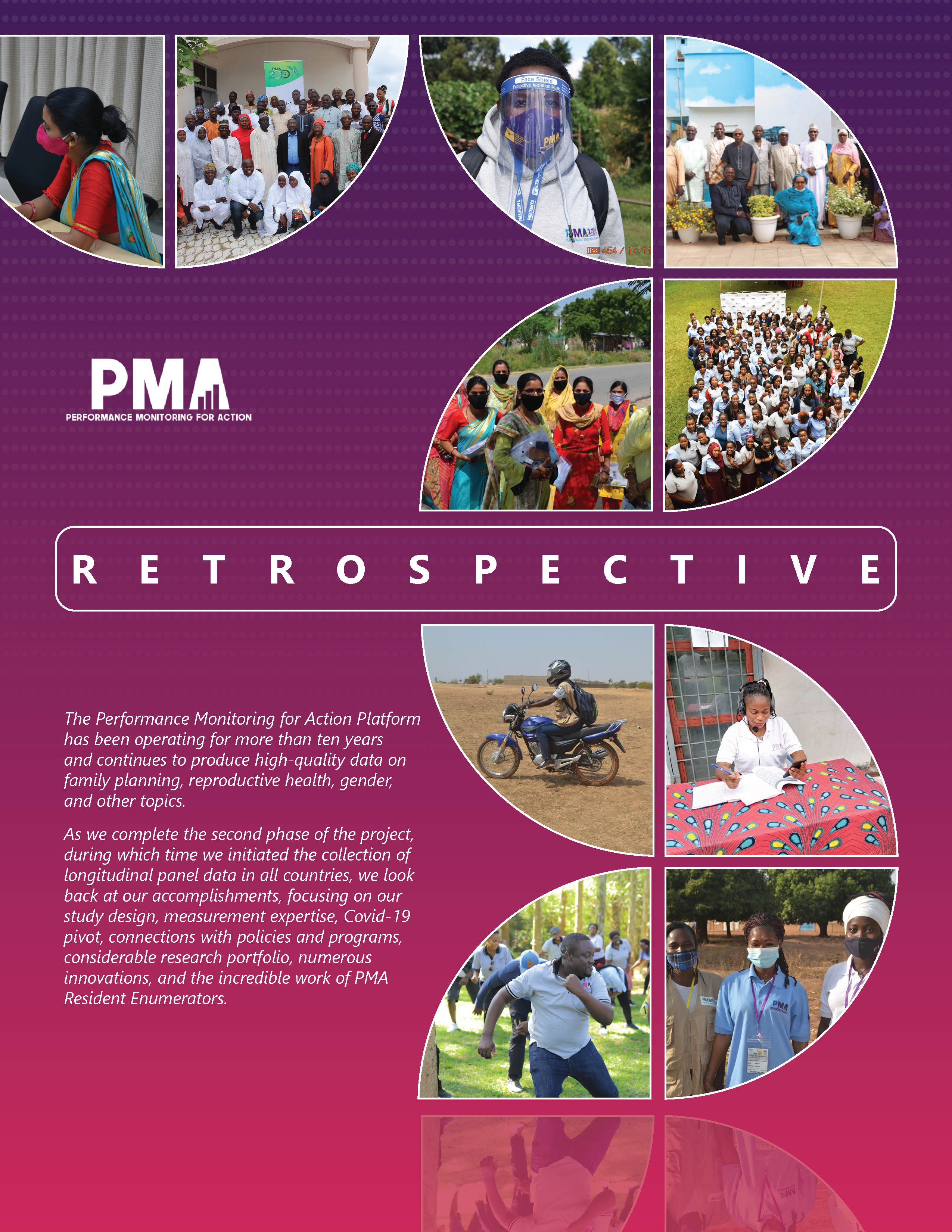
Our Global Program on Research, Measurement, and Data Monitoring demonstrates our leadership in filling critical gaps in science, while generating new evidence and utilizing research to inform practice and drive the global family planning agenda. PMA generates frequent, high-quality surveys monitoring key health indicators in nine countries in Africa and Asia. Data is available open-source for research, program planning, and policy-making. High-quality data — collected frequently, turned – around quickly, and locally owned — help decision makers understand what is working, and what is not, enabling decisions that are more sensitive and responsive to evolving needs.
Featured Institute Experts

Aisha Siewe
Associate Director for DataDr. Aisha Siewe provides oversight to the array of data collection, management, analysis, and release activities for PMA and related projects. She oversees PMA technical capacity-b...More
Aisha Siewe
Associate Director for Data
Audrey YAO
Research Program OfficerAt PMA, Audrey supports the data processing systems and ensures the data is readily available. Audrey's role encompasses organizing and preparing data for public use, maintaining a...More
Audrey YAO
Research Program Officer
Carolina Cardona
Assistant ScientistI am a health economist focused on understanding demographic processes and their effect on...More
Carolina Cardona
Assistant Scientistrelated Headlines

Watch Now: PMA’s Survey Training & Learning Resources Toolkit Launch
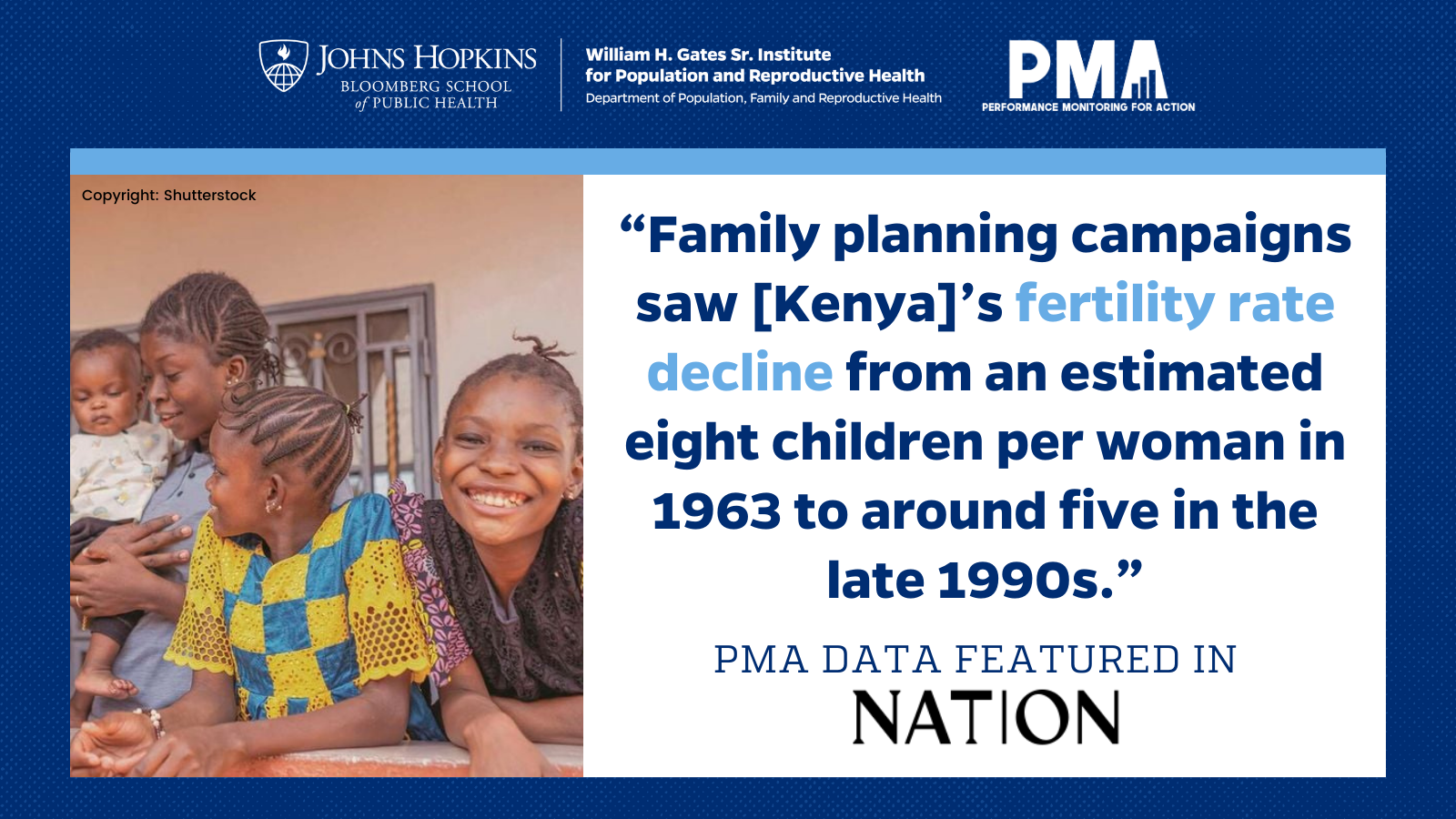
PMA Data Featured in the Nation by FPNN Fellow and ICFP EXCELL Awardee Angela Okech

About Performance Monitoring for Action
PMA generates frequent, high-quality surveys monitoring key health indicators in nine countries in Africa and Asia. Data is available open-source for research, program planning, and policy-making.
EXPLORE OUR PLATFORMS & PARTNERSHIPS