WHGI Research Area
Maternal Health
Improving care quality, outcomes, and access across the continuum of reproductive and maternal health
WHGI has shown that preventing maternal deaths begins long before delivery, tracing how contraceptive access, quality of care, and policy together shape whether women survive pregnancy and childbirth.
What We Study
The William H. Gates Sr. Institute for Population and Reproductive Health's (WHGI) studies maternal health from family planning through the first year after birth, focusing on preventing maternal complications before they start and strengthening the systems that must respond when they don't.
This work begins upstream, tracing how contraceptive access and improvements in maternity care have jointly shaped maternal mortality trends over the past two decades.
It also follows women forward: Performance Monitoring for Action (PMA) Ethiopia tracked women from pregnancy through the first year postpartum, capturing their own experiences of care and data from the facilities that served them. Facility-based quality assessments turn to the other side of that encounter, asking whether the health system is equipped to recognize and respond when complications arise.
And because prevention operates at the policy level as much as the clinical one, U.S.-based analyses extend the same lens further upstream, examining how state-level abortion restrictions shape maternal and infant mortality.
Why it Matters
Between 2000 and 2023, maternal deaths worldwide fell by 41%. WHGI research shows that this progress came from two sources, 61.2% is attributable to improved maternity care and 38.8% to family planning. Contraceptive use alone is estimated to have averted 272,000 maternal deaths in a single year. These estimates make the contribution of preventing maternal deaths visible.
The same body of work also shows what stands in the way of improving maternity care. Widely used facility surveys capture only 4 of 31 recommended quality of care indicators related to childbirth, leaving the care women actually receive largely undocumented.
Care can only help women who reach it: economic status, education, and empowerment shape whether women access maternal health services in the first place, a pattern confirmed from data decades apart, from early cross-national research to WHGI's more recent Ethiopia findings.
Access can also be withdrawn: in the United States, WHGI’s WHGI's Dr. Suzanne Bell's research found a 9.2% increase in pregnancy-associated deaths in states that enacted abortion bans, a stark demonstration of what happens when a prevention lever is removed rather than strengthened.
What Comes Next
WHGI seeks to advance its maternal health research around a framework, with particular emphasis on preventing harm and enabling timely rescue before women reach referral facilities.
The work aims to examine how self-care, community characteristics and interventions, and primary-care systems can support rapid initial response, effective referral, and continuity of care across pregnancy and postpartum.
WHGI will pilot and evaluate primary-care models, with the aim of identifying and scaling approaches that make maternal rescue earlier, more equitable, and more reliable.
Key Resources & Publications in This Area
Gender Differences in Sexually Active Life Expectancy in France
Social Network Involvement in Abortion Care-Seeking and Abortion Outcomes among a Population-Based Sample of Nigerian Women Who Had Abortions
Infertility service availability, geographic accessibility, and use: results from linked facility-female cross-sectional data in Burkina Faso, Côte d’Ivoire, Niger, and Uganda
Birth certificate measures of maternal morbidity and their limits in abortion policy research
Impact of The Challenge Initiative on Public-Sector Family Planning Service Provision in Pakistan: Evidence from a Difference-in-Differences Analysis
Effect of maternity care improvement, fertility decline, and contraceptive use on global maternal mortality reduction between 2000 and 2023: results from a decomposition analysis
Abortion Bans and Maternal, Pregnancy-Related, and Pregnancy-Associated Mortality in 14 US States, 2016–2023: Estimated Impacts Amid Substantial Measurement Challenges
PMA, a decade of innovation in family planning data: Voices of the national survey directors
Meet the WHGI Research Team

Professor
Saifuddin Ahmed, MBBS, PhD, is a Professor at the Department of Population, Family and Reproductive Health, with a joint appointment in the Department of Biostatistics. His research interests include improving estimates of maternal mortality and morbidity in resource-poor settings, family planning modeling, and survey design and intervention evaluation.
Professor
Saifuddin Ahmed, MBBS, PhD, is a Professor at the Department of Population, Family and Reproductive Health, with a joint appointment in the Department of Biostatistics. His research interests include improving estimates of maternal mortality and morbidity in resource-poor settings, family planning modeling, and survey design and intervention evaluation.

Assistant Professor
Suzanne Bell, PhD, MPH, is an Assistant Professor in the Department of Population, Family and Reproductive Health at the Johns Hopkins University Bloomberg School of Public Health, where she received her PhD with a focus in demography.
Assistant Professor
Suzanne Bell, PhD, MPH, is an Assistant Professor in the Department of Population, Family and Reproductive Health at the Johns Hopkins University Bloomberg School of Public Health, where she received her PhD with a focus in demography.

Principal Investigator | Associate Professor
Dr. Linnea Zimmerman has a PhD from the Department of Population, Family and Reproductive Health at the Johns Hopkins Bloomberg School of Public Health and a Masters in Public Health from Emory University. She has a background in demography and focuses on family planning and women's reproductive health research.
Principal Investigator | Associate Professor
Dr. Linnea Zimmerman has a PhD from the Department of Population, Family and Reproductive Health at the Johns Hopkins Bloomberg School of Public Health and a Masters in Public Health from Emory University. She has a background in demography and focuses on family planning and women's reproductive health research.

Assistant Professor
Celia Karp, PhD, is an Assistant Professor at the Johns Hopkins Bloomberg School of Public Health and a Senior Technical Advisor at the William H. Gates Institute. Her work focuses on reproductive health preferences, services, and outcomes.
Assistant Professor
Celia Karp, PhD, is an Assistant Professor at the Johns Hopkins Bloomberg School of Public Health and a Senior Technical Advisor at the William H. Gates Institute. Her work focuses on reproductive health preferences, services, and outcomes.
By the Numbers
Countries & Territories
WHGI included 195 countries and territories in the global maternal-mortality decomposition analysis.
Regions of Ethiopia
WHGI has conducted research in six regions of Ethiopia, representing approximately 91% of the population, in the PMA Ethiopia panel.
News on Maternal Health
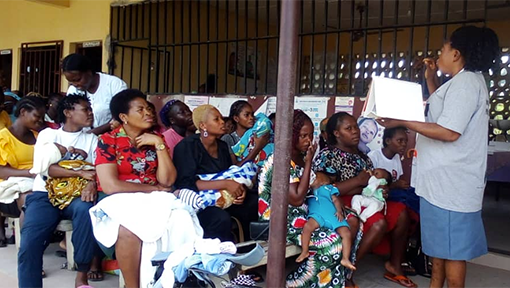
How TCI Helped Develop a Nigerian MNCH Week Into a Family Planning Platform
A single planning session turned Akwa Ibom, Nigeria’s state-funded MNCH Week into a family planning platform, reaching over 10,000 clients and 7,358 new FP users at no added cost.
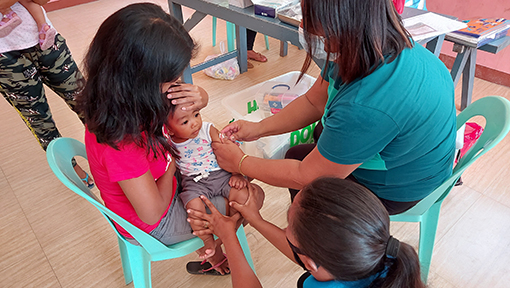
Strengthening Maternal Health Systems in the Philippines Through Local Leadership
Led by WHGI, The Challenge Initiative is strengthening maternal and child health systems in the Philippines through locally led, evidence-based implementation.

Family Planning and Maternity Care: New Evidence from WHGI Faculty on Their Combined Role in Reducing Maternal Mortality
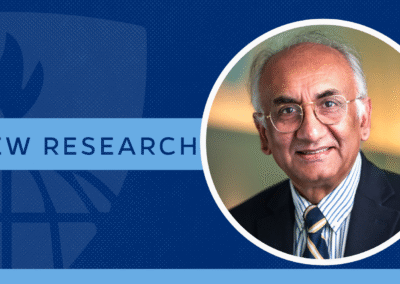
New research in Lancet Global Health led by WHGI’s Dr. Saifuddin Ahmed identifies the factors behind maternal health progress and pathways to accelerate it.
Want to know more?
Connect with Us
Learn more about WHGI's maternal health work, access available data and publications, or connect with researchers to explore opportunities for collaboration.
Please send an email to gatesinstitute@jhu.edu with the subject line "Research."