Original blog published by Kim Martin and Kate Graham
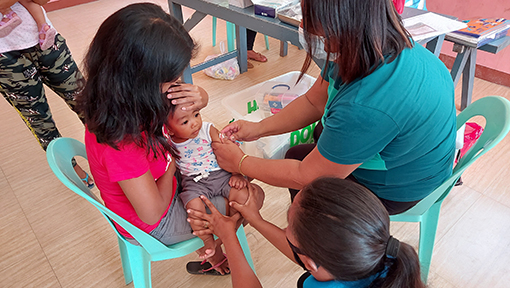
Across the Philippines, where a woman lives can still influence whether she receives the care needed for a safe pregnancy and childbirth—and whether her child has the opportunity to survive and thrive.
Improving maternal and child health requires more than expanding access to services. It depends on strong local health systems, data-informed decision-making, and sustained investment in the people and institutions responsible for delivering care.
That is the focus of a new maternal, newborn, and child health (MNCH) initiative launching in three rapidly growing Philippine cities through The Challenge Initiative (TCI). Supported by the Quantedge Advancement Initiative and the Philanthropy Asia Alliance, the program will help local governments strengthen maternal and child health systems in Cagayan de Oro, Zamboanga, and Iligan—reaching communities where maternal and child mortality remain significant public health challenges.
For the William H. Gates Sr. Institute for Population and Reproductive Health (WHGI), maternal health is a critical area of research and implementation. Through programs like TCI, WHGI supports countries in translating evidence into practical, locally owned solutions that improve health outcomes and strengthen health systems over the long term.
From Service Delivery to Systems Strengthening
Rather than creating parallel programs, the initiative will work within existing government health systems, partnering with city health officials, hospitals, and community leaders to strengthen the services already available to families.
The program builds on TCI’s proven Lead-Assist-Observe-Monitor coaching model, which provides intensive technical support before gradually transitioning leadership and implementation to local governments. This approach has helped strengthen family planning programs in countries around the world and is now being adapted to support the broader continuum of MNCH care.
“Our goal is not simply to improve services during the life of a project,” said Anthony Faraon, Chief of Party for TCI Philippines. “We want local governments to have the knowledge, systems, and capacity to sustain these improvements long after external support ends.”
Addressing Local Challenges with Local Solutions
Although the three participating cities share a commitment to improving maternal and child health, each faces distinct challenges.
In Cagayan de Oro, maternal mortality remains significantly higher than the national average, making improvements in the quality of maternal care a top priority.
In Zamboanga, strengthening emergency obstetric and newborn care—as well as referral systems that connect women with lifesaving services—will be central to reducing preventable deaths.
Meanwhile, Iligan is focused on improving continuity of care after birth by strengthening breastfeeding support, immunization services, and long-term engagement with families.
Rather than applying a single model everywhere, each city will use its own health data to identify priorities and guide implementation, ensuring that investments respond to local needs.
Building Sustainable Health Systems
The initiative reflects growing recognition that improving maternal and child health requires strong systems—not just individual interventions.
During its first year, local teams will assess existing health services, establish leadership structures, and begin coaching health workers and government officials. Over time, cities will strengthen their use of data, financing, and quality improvement processes so they can continue delivering high-quality maternal and child health services independently.
By the program’s conclusion in 2029, the goal is for each city to operate a sustainable, locally led maternal and child health program that continues improving outcomes for women, newborns, and children.
A Growing Focus on Maternal Health
Improving maternal health requires more than effective interventions—it requires strong health systems that can sustain them. Through research, implementation science, and partnerships with governments and local institutions, WHGI is committed to identifying, testing, and scaling evidence-based approaches that improve maternal and child health.
The new initiative in the Philippines reflects that approach, demonstrating how locally led implementation, continuous learning, and knowledge sharing can strengthen health systems and improve outcomes for women, newborns, and children.