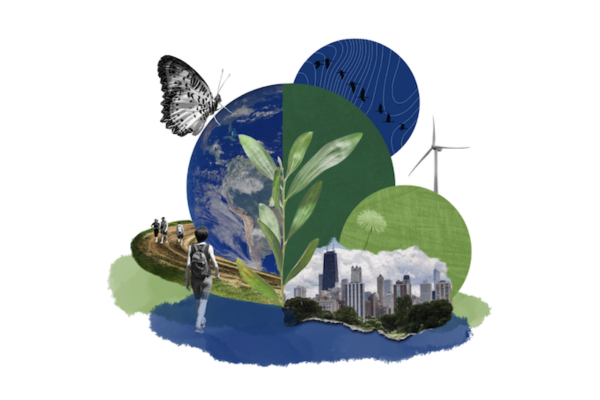
The winners of the Demographics & Planetary Health Story Prize have been announced, recognizing original journalism that connects demographic change to planetary health.
Hosted by the Johns Hopkins Institute for Planetary Health and the Planetary Health Alliance, the Hopkins Population Center, and the William H. Gates Sr. Institute for Population and Reproductive Health, the contest took a wide lens to honor excellence in all types of reporting, journalism, and content creation.
More than 130 stories were submitted from reporters working across Africa, South Asia, the Middle East and the Americas. They came from national newspapers and community radio, global outlets, and personal blogs, written in English, French, Arabic and Swahili.
The winners are:
-
Print, Podcast, Digital News, Newsletter
In Badin, Nearly Half of Babies Were Born Too Soon in August. Was It the Heat? (Aman Nadeem, Substack)
Explores a spike in preterm births in Pakistan during one hot month and tests whether the heat is really to blame.
-
Print, Podcast, Digital News, Newsletter
Hunger, birth and hope: Hunger and isolation plague mothers in remote Marsabit Region (Agutu Rose, KTN News)
Video feature shows how drought and food shortages shape pregnancy and birth in Marsabit, Kenya.
-
Social Media, Blogs & Video
When the Rains Come, Girls Pay the Price: Climate Change and the Reproductive Health Crisis Kenya Has Yet to address (Lornah Nderitu, LinkedIn)
When floods hit, girls drop out of school and face higher risks of exploitation and early pregnancy in Kenya.
-
Social Media, Blogs & Video
Casamance Facing Rising Sea Levels / La Casamance face à la montée des eaux (Jérémie Jackson, ePOP Network)
Rising seas in Senegal are redrawing the coastline and the lives of the families who depend on it.
Five emerging patterns help tell the full story. These patterns show up in ordinary lives, in a lost day’s wages, a risky pregnancy, a failing harvest or the decision to leave home. Each can look small on its own. Together, they offer a glimpse into an underreported story that matters far more than its coverage suggests.
Five patterns
- Climate Change Is Redrawing Where People Live, and Who Gets Left Behind
- Extreme Heat Is Quietly Cutting Wages for the World’s Outdoor Workers
- Climate Shocks Are Putting Pregnancies at Risk Where Care Is Already Hard to Reach
- Women Are Doing Much of the World’s Climate Adaptation, Usually Without a Plan or a Budget
- Pollution Settles Where the Poorest Live and Work, in Their Food, Water and Bodies
Climate Change Is Redrawing Where People Live, and Who Gets Left Behind
At a glance
- Rapid urban growth puts pressure on forests, water and land well beyond city limits.
- People displaced by climate disasters face higher risks of violence, exploitation and trafficking.
- When places become harder to live in, people with resources leave first, and services thin out for those who remain.
Fertility rate decline (or increase), a changing climate and a suffering environment are usually treated as separate problems. However, each shapes the other in very intimate ways.
Growing cities draw on the land around them for fuel, water, disposal and food. Floods, drought and rising seas are pushing families from their traditional homes, often into situations that are unfamiliar or more dangerous than the ones they had to leave behind.
Migration is fueling a widening poverty gap. Those with money and skills can leave places that are becoming harder to live in, either because of safety or natural forces. This creates an imbalance of opportunity, needed services and economic drivers.
Coverage Spotlight
Bukavu, capitale du charbon : comment la pression urbaine asphyxie les forêts du Sud-Kivu
In French
By Yves Mutuma Kitoga, Mongabay
Are environmental risks making Canada’s doctor shortage more acute?
By Annie Burns-Pieper, The Narwhal
Extreme Heat is Quietly Cutting the Wages of the World's Outdoor Workers
At a glance
- Rapid urban growth puts pressure on forests, water and land well beyond city limits.
- People displaced by climate disasters face higher risks of violence, exploitation and trafficking.
- When places become harder to live in, people with resources leave first, and services thin out for those who remain.
Extreme heat is usually reported as a weather event. However, for much of the world’s workforce, heat is more of an economic event, as extreme heat can behave more like a pay cut. People who earn their living outdoors, or in market settings, can’t stop working when temperatures slowly increase. Instead, over time, the systems slow down, decrease hours and usually push through, absorbing the cost on their bodies.
And for the majority of the time, that cost isn’t shared evenly. Women in informal jobs often lose income at work, then come home to unpaid labor that is only made harder when the heat increases. A growing body of research also links hotter periods to more violence between partners, a connection most heat plans have yet to account for.
Coverage Spotlight
Extreme Heat Undermines Decent Work in North Eastern Kenya
By Chemtai Kirui, Inter Press Service (IPS)
As Heat Increases Women’s Vulnerability to Violence, Researchers Seek More Sensitive Policies
By Disha Shetty, Health Policy Watch
Displaced by Disaster, Madi’s Chepangs Face Violence and Human Trafficking
By Abdulsalam Egye, Medium
Climate Shocks Are Putting Pregnancies at Risk Where Care Is Already Hard to Reach
At a glance
- Floods, heat and drought cut pregnant women off from the routine care that keeps births safe.
- Extreme heat is associated with higher risks of preterm birth and stillbirth.
- After disasters, adolescent girls are more likely to leave school and face exploitation or unintended pregnancy.
In all cases, pregnancy leaves little room for disruption or complication. Although women and their babies are very resilient, safe care depends on timing, having access to a clinic, and having the basics, including clean water, food and shelter. A climate shock or natural disaster can interrupt all of these at once.
For example, floods can push pregnant women into shelters with no privacy, improper sanitation and no skilled care. A flooded route turns the trip to a hospital into a risk of its own, adding unknown complications to the mix. Heat raises the chance of complications for both the mother and the baby and mosquito-borne diseases are reaching new frontiers and being pushed into areas that are not prepared.
Coverage Spotlight
‘I do not know if the doctor survived’: young mothers recall ‘living hell’ of Nepal’s floods
By Jigyasa Mishra, The Guardian
Women Are Doing Much of the World’s Climate Adaptation, Usually Without a Plan or a Budget
At a glance
- Women do much of the day-to-day work of adapting farms and households to a changing climate.
- When men migrate for work, women are often left managing land, water and food on their own.
- Community-led efforts, from farming collectives to restoring springs, are among the most practical adaptation already underway.
The world’s adaptation to a changing climate is taking place at the roots of the community and in the drivers of local economies, usually without a coordinated plan or budget. It is happening in fields, the kitchens, the schools and community programming. And most of this adaptation is being driven by women.
In many rural places, women manage the water, the farming and the food. As the rains grow less predictable, the work to adapt and respond expands rapidly. Women are driving the innovation in the response. Many times, we see women trying new types of crops, innovating on higher-producing soil and forming collectives to build stronger markets.
Coverage Spotlight
L’eau qui s’éloigne, la vie qui s’alourdit : en Haute-Guinée, les femmes au pèlerinage de la crise climatique
By Hassatou Lamarana Bah, Actualité Féminine
‘Invasive Weed Devours Farmland in Rural Taiz, Deepening Farmers' Suffering’
By Jackson Okata, Inter Press Service (IPS)
Kasaï Central : À Katende, les légumineuses s‘imposent comme une réponse aux défis agricoles et économiques
By Fabrice Kabamba, Congo Kasaï
Pollution Settles Where the Poorest Live and Work, in Their Food, Water and Bodies
At a glance
- Toxic exposure concentrates in poor communities near mines, dumpsites and unregulated industry.
- Overuse of antibiotics in food production helps drug resistance spread into human health.
- Informal workers, especially women, often face the highest exposure and the least protection.
It is no surprise that pollution doesn’t spread evenly, but instead it concentrates in the places where it is dumped or mined. Many times, the pollution enters the local food production and distribution systems and settles into the bodies of the people who live or work nearby.
Some of the harm has immediate effects on the lungs, like smoke from burning trash or a plant. Some harm takes years to realize, as is the case with lead, mercury and drug-resistant infections. The people most exposed tend to have the fewest choices, such as waste pickers, informal miners and families with nowhere else to live. In some mining communities, women pay a further price, with exploitation built into the terms of getting work at all.
Coverage Spotlight
Fish, Drugs and The Creek: How Port Harcourt's Catfish Ponds Are Breeding Resistance
By Odimegwu Onwumere, The Nigerian Voice
Mercury-Free Mining Promises: Toxic Exposure Persists in Western Kenya
By Seliphar Machoni, Story Spotlight
Millions at Risk: FDA Flags Lead Levels in Ghanaian Cooking Pots
(Video)
By Nadima Umar Uthman, GHOne TV