By Natalie Apcar, Advocacy & Communications Manager
When Prof. Hadiza Galadanci was first connected with the William H. Gates Sr. Institute (WHGI), there were virtually no master’s-level training programs in reproductive health in Northern Nigeria, and only two in the south.
Today, there are six masters programs focusing on reproductive health, policy, and adjacent fields just at Bayero University Kano, where Prof. Galadanci is a Professor of Obstetrics and Gynecology in the College of Health Sciences. What began as a single initiative has grown into a dynamic academic hub shaping the future of reproductive health leadership in the region.
A Shift from Practice to Policy
Prof. Galadanci’s imprint on maternal and reproductive health in Northern Nigeria can be felt in a variety of ways. As the first female obstetrician trained in the Kano region, Prof. Galadanci was in many ways a trailblazer and early champion for women’s advancement in medical sciences. But in the early 2010s, as an Associate Professor in Gynecology and Obstetrics, she set her eyes on a new path. “As much as I loved working with patients, I decided to also become a researcher so I could affect policy and save many more lives,” she states in a recent photo essay for the Gates Foundation.
At that time, Prof. Galadanci was connected by Prof. Oladosu Ojengbede of the University of Ibadan to Prof. Amy Tsui, then Director of WHGI. WHGI had existing partnerships with the University of Ibadan and Obafemi Awolowo University supporting reproductive health masters programs, and was encouraging they extend that model and mentor other institutions in the region.
WHGI recognized from the outset the importance of building strong academic institutions in developing countries as a way to build individual leaders and create sustainable change. “Educate individuals, and they’ll remain educated,” says Amy Tsui. “In a university, once a degree program is established, unless it becomes irrelevant, it almost never ends … Even today some 20 years later, those degree programs WHGI seeded continue to flourish. That is a return on investment, the gift that keeps on giving.”
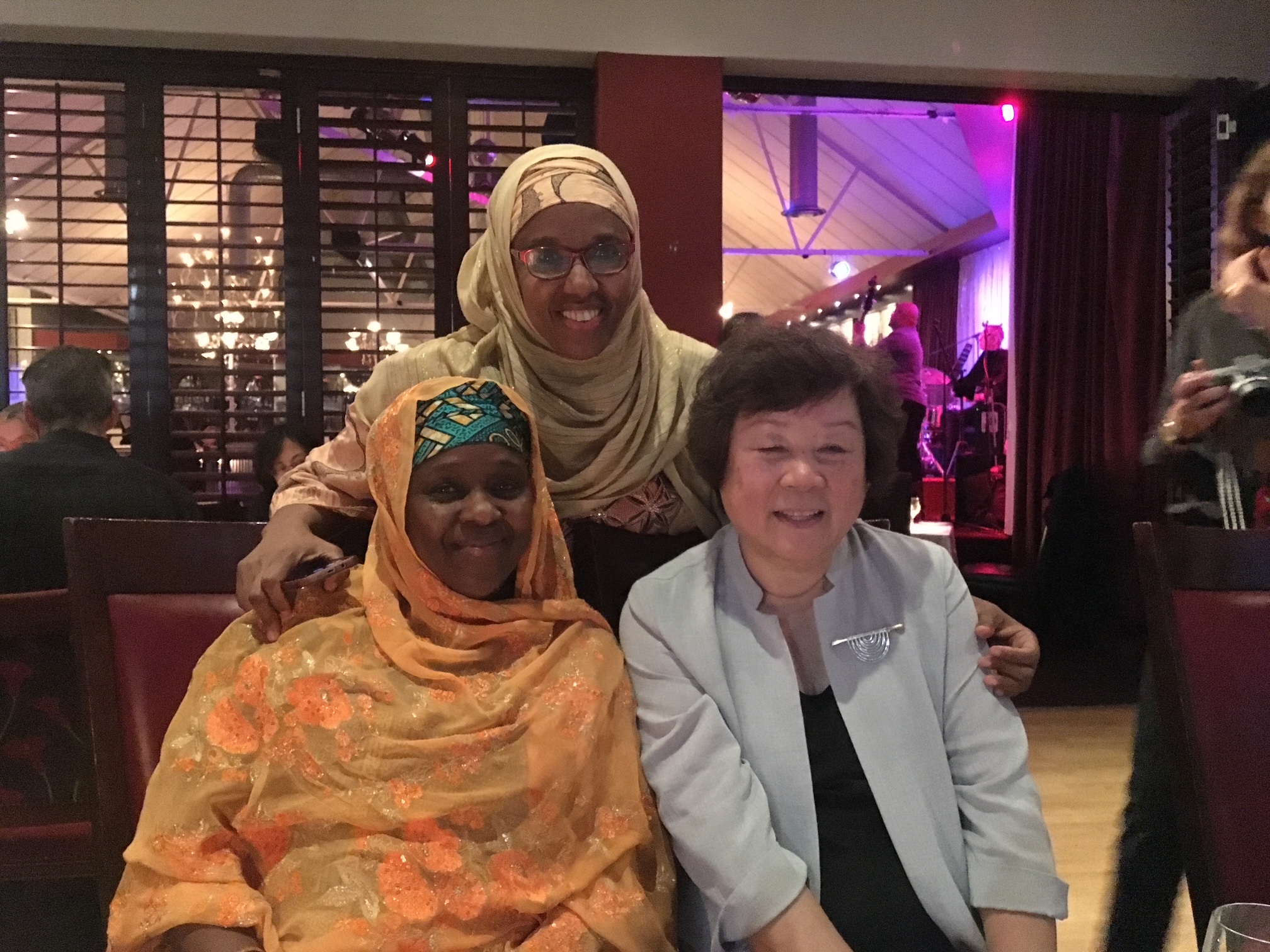
Prof. Hadiza with Dr. Amy Tsui and the Commissioner of Women's Affairs Kano State, in 2017 at a women's empowerment measurement meeting in Cape Town, South Africa.
Between 2002-2012 WHGI supported the establishment of eight reproductive health centers of excellence at partner academic institutions in six countries (Nigeria, Ghana, Ethiopia, Uganda, Malawi, and Egypt).

“Educate individuals, and they’ll remain educated. In a university, once a degree program is established, unless it becomes irrelevant, it almost never ends … Even today some 20 years later, those degree programs WHGI seeded continue to flourish. That is a return on investment, the gift that keeps on giving.” - Dr. Amy Tsui
In the early days, Prof. Galadanci ran the entire program from her personal office, with a single secretary to manage admissions and administration “We really had to advocate for the program,” Prof. Galadanci states, explaining that the development of the masters program became a collaboration between Obsterics and Gynaecology, Paediatrics and Community Medicine Departments.
With seed funding from WHGI, the program also strengthened its infrastructure—establishing resources such as a dedicated computer lab to support student research and learning.
Around 40 applicants applied for the first year of study, with roughly half of those admitted. From this initial reproductive health master’s program grew five additional degrees, supported by the World Bank’s Africa Center of Excellence for Population Health and Policy: maternal and child health policy; global health and policy; public health nursing and policy; public health nutrition and policy; and public mental health and policy. Together, they equip graduates with leadership skills and expertise in organizing and managing reproductive health services, preparing them for careers in research, programs, and policy development.
Investing in Students
For many students, the program became a turning point. Residents who once focused solely on clinical care gained research experience and went on to work in ministries of health and academic institutions across the country.
For Prof. Galadanci, this vision was deeply personal. After her own masters training on reproductive health at the London School of Hygiene & Tropical Medicine, she saw the advantage of the masters to her clinical work . “I wanted to give that same opportunity to my colleagues,” she explains.
Today, her students embody that blended role she champions: clinician and researcher, practitioner and policymaker.
Then and Now: Reproductive Health Masters Programs and Challenges
The road to establish what is now a thriving academic center of excellence was not without its challenges.
“At first, funding was a real issue,” notes Prof. Galadanci. Fortunately, shortly after its inception, and due in large part to her leadership, the center was able to secure additional funding from the World Bank to develop additional masters and PhD programs under the African Center of Excellence for Population Health and Policy (ACEPHAP).
Later, the center met the roadblock of not having enough faculty to teach in the programs. For this challenge, Prof. Galadanci and leaders used grant funding to sponsor faculty to travel to the United States and other foreign institutions for leadership courses and capacity building.
And now, Prof. Galadanci observes a shift in students moving more into academic programs over professional ones. “This means a greater value in the maternal health and policy master’s program, which has a wider scope,” she says.
“We are certainly in a transition period now,” Prof. Galadanci reflects, “from a single program to more of a comprehensive center." What began as one master’s degree is now part of a broader ecosystem—spanning research, policy, training, and community-based interventions. The center is not only producing skilled professionals but also shaping the systems and policies that influence reproductive health outcomes across Nigeria.
For donors and partners, this transformation underscores the power of investing in institutions. By supporting academic programs that endure, the impact extends far beyond individual cohorts—creating wave effects that strengthens health systems for years to come. Four reproductive health centers of excellence have joined their WHGI-seeded peers and expanded into Schools of Public Health.
And for Prof. Galadanci, the mission continues: to expand opportunity, build leadership, and ensure that the next generation is equipped to drive lasting change.
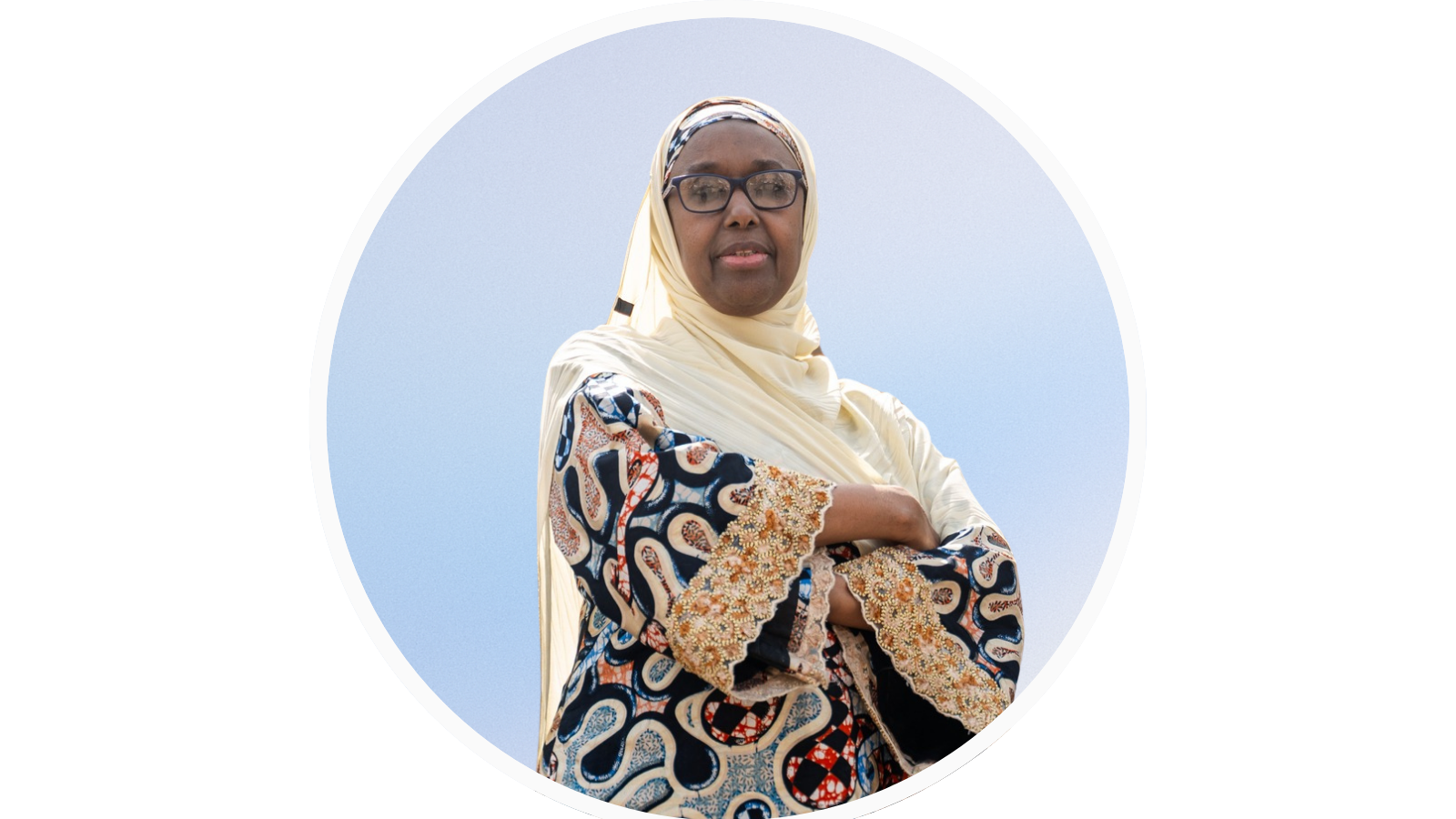
We are certainly in a transition period now, from a single program to more of a comprehensive center. - Prof. Galadanci
Investing in Impact: From Education to Lives Saved
For Prof. Galadanci, the mission continues: to expand opportunity, build leadership, and ensure that the next generation is equipped to drive lasting change. Alongside her work in education and leadership, she has contributed to advancing solutions to one of the leading causes of maternal death in Nigeria: postpartum hemorrhage (PPH).
Working with global partners, Prof. Galadanci has supported the introduction of practical, evidence-based approaches to improve early detection and treatment of PPH, including the use of simple tools such as the PPH drape, an inexpensive plastic sheet, and contribution to research behind the E-MOTIVE protocol. These efforts—now reflected in global guidance and national implementation—have helped demonstrate significant reductions in severe bleeding after childbirth and hold promise for transforming maternal health outcomes at scale.
Together, her contributions to both clinical innovation and academic leadership reflect a singular vision: strengthening systems so that fewer women die from preventable causes. This is also the goal of investments by WHGI—supporting reproductive health education and leadership in low- and middle-income countries so that locally led expertise can drive lasting change. As Nigeria and other countries continue working to reduce maternal mortality, that impact is already strong—in classrooms, in clinics, and in the lives saved through stronger, more responsive health systems.