
Over the last two decades, maternal mortality has declined globally — but progress has varied widely across regions. According to global estimates, the number of maternal deaths declined by 41% between 2000 and 2023, from 443,000 to 260,000 deaths annually. While this represents major gains, the world remains off track to achieve maternal mortality reduction targets under Sustainable Development Goal 3 (SDG 3), particularly in settings facing health system constraints and persistent inequities.
A new analysis published in The Lancet Global Health helps clarify what has driven this progress and what will be required to accelerate it. This research was led by Saifuddin Ahmed, faculty member at the William H. Gates Sr. Institute and Professor at the Department of Population, Family and Reproductive Health at the Johns Hopkins Bloomberg School of Public Health, reinforcing the Institute’s ongoing contributions to global evidence generation on maternal health, family planning, and health systems strengthening.
Global health experts agree that this evidence demonstrates the ripple effects of investments in family planning–providing significant gains outside of the family planning indicators.
Anita Zaidi, Director of the Gender Equality Division at the Gates Foundation, stated in a LinkedIn post:
The findings reinforce a simple truth: saving mothers’ lives requires both high-quality maternity care and reliable access to contraception. These efforts work best together—and both are essential for continued progress.”
What the study examined
The research assessed the relative contribution of:
- Improvements in maternity care, which reduce the risk of death per birth, and
- Effects of contraceptive use on fertility reduction, which reduces women’s exposure to pregnancy-related mortality risks.
The study includes analysis across 195 countries and territories, using maternal mortality trend estimates from WHO/Maternal Mortality Estimation Inter-Agency Group (MMEIG) and contraceptive use data from the UN’s World Contraceptive Use 2024 database.
Key Findings and Implications for Maternal Health
The authors estimate that:
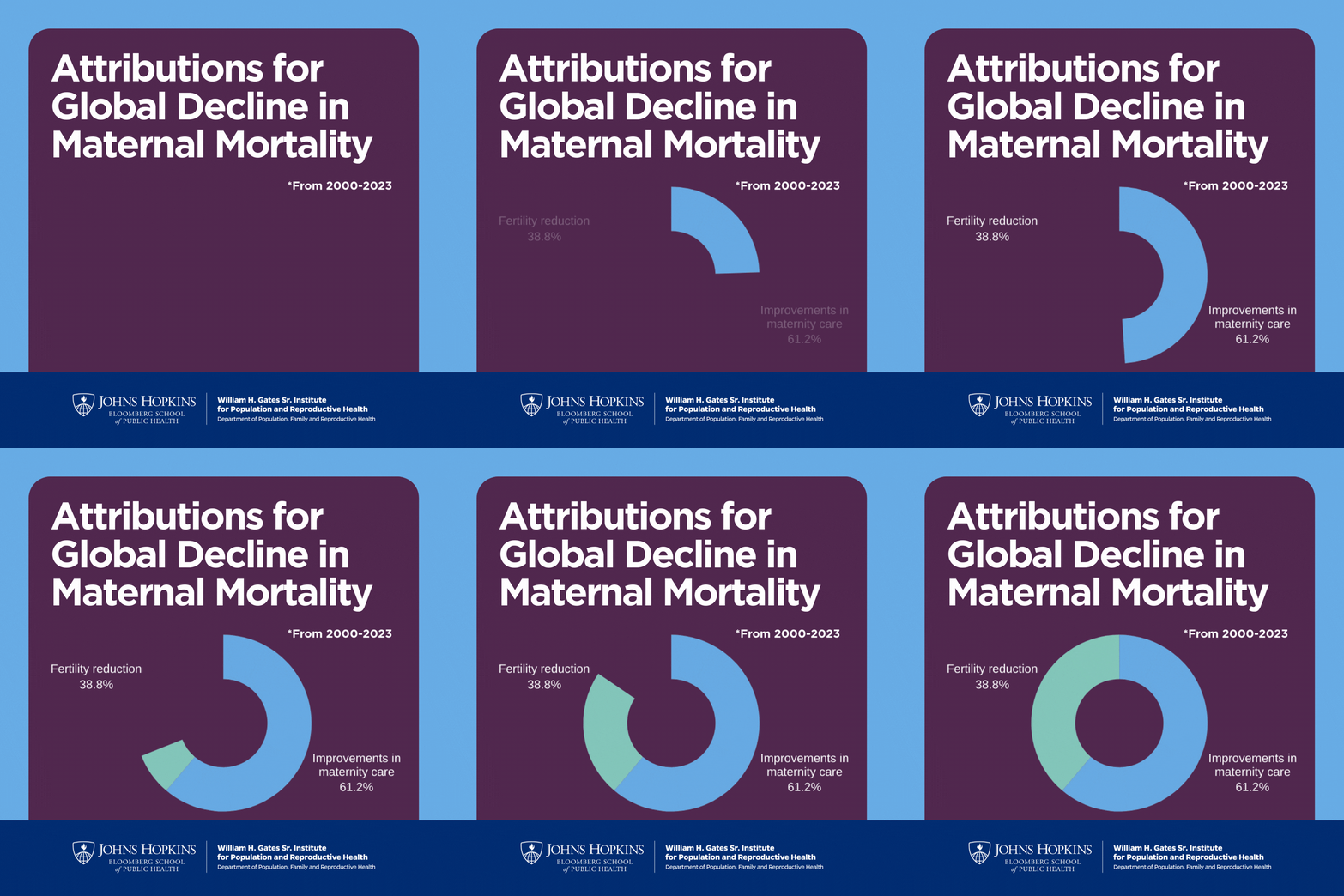
- 61.2% of the global decline in maternal mortality from 2000–2023 was attributable to improvements in maternity care (e.g., skilled care, emergency obstetric services, and strengthened systems of referral and treatment).
- 38.8% of the decline was attributable to fertility reduction, reflecting fewer pregnancies overall.
- Increased contraceptive use played a major role: rising contraceptive prevalence prevented an estimated 77,400 maternal deaths in 2023 alone—approximately 24% of all maternal deaths that year.
Regional patterns were also notable. The fertility reduction effect was most pronounced in: Latin America and the Caribbean, Sub-Saharan Africa, and Eastern and Southeastern Asia.


Why this matters for the family planning field
Family planning is often presented as a population control issue. This is not a population issue at all. This is a women’s health issue. – Dr. Ahmed, Lead Author and WHGI Faculty
Family planning is often framed narrowly as an intervention to prevent unintended pregnancy. This paper reinforces a broader—and evidence-based—understanding: contraceptive access is also a major contributor to maternal survival, operating through fertility reduction and reduced exposure to pregnancy-related risks.
At the same time, the findings underscore that family planning and maternity care are not substitutes. Maternal mortality declines have been driven by both:
- stronger, higher-quality maternity care systems, and
- expanded contraceptive use and fertility reduction.
This reinforces the need for integrated approaches across SRHR and maternal health programming—particularly in countries with high maternal mortality burdens and constrained service delivery systems.
Recognition at ICFP
This research was also recognized at the International Conference on Family Planning (ICFP) through the Power of FP Award, which honors outstanding efforts to advance research, programs, and policy innovations that position family planning as a foundation for broader health, economic, and social development. Watch the video of his presentation on the awards stage.
Implications for family planning and maternal health policy and investment
The study’s conclusions are clear: achieving SDG 3 targets will require accelerated progress on both fronts. To sustain and deepen maternal mortality reductions, stakeholders should:
- Continue strengthening maternity care quality and coverage, especially emergency obstetric care and referral systems.
- Protect and expand equitable access to modern contraception, including method choice and rights-based service delivery.
- Invest in strategies that integrate FP and maternal health services, ensuring that women are supported across the continuum of care.
In an era of constrained financing and heightened pressure on health systems, this analysis provides timely evidence that family planning is central—not peripheral—to maternal mortality reduction, and that continued gains depend on coordinated, sustained investment in both maternity care and contraception.
Watch the recording from Dr. Ahmed’s presentation at ICFP, where this paper was awarded the Power of FP Award.