For years, families across Pakistan paid an 18% General Sales Tax just to access basic reproductive health supplies - condoms, intrauterine devices, hormonal contraceptives - plus an added tax on women's hygiene products (commonly referred to as a "pink tax"). The cost fell hardest on the households least able to absorb it: nearly 70% of Pakistan's unmet need for family planning sits among its lowest-income families.
Removing those taxes became a sustained advocacy priority for The Challenge Initiative (TCI), implemented locally by Greenstar Social Marketing, working alongside partners across the sexual and reproductive health and rights and maternal, newborn, and child health sectors. The Country Engagement Working Group gave the coalition a standing platform to keep the issue in front of decision-makers.
How TCI Helped End the Taxes on Contraceptives and Reproductive Health Products
The push moved on two fronts at once. In Punjab, TCI spent more than a year advocating with Health and Population Minister Khawaja Imran Nazir to end the pink tax on contraceptive and menstrual hygiene products. Through the province’s Partners’ Forum and direct meetings, TCI built support and helped elevate the issue to the federal level. At the national level, the ask reached Federal Minister for Health in March 2026, and by May, TCI was briefing Punjab's parliamentarians directly to get the issue onto the legislative and budget agenda.
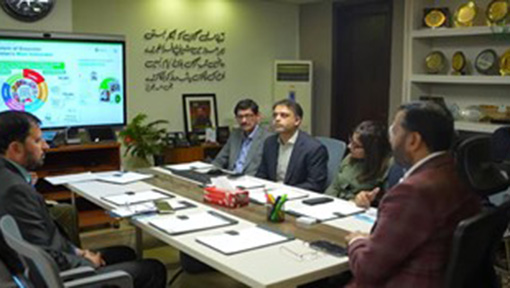
A turning point came that month, when Punjab's Health Minister visited Greenstar's Lahore office. TCI laid out the comparison plainly: the existing 18% tax against a zero-rated alternative, along with the price drops, access gains, and health benefits that would follow from the switch.
The sustained push across both levels of government worked. In the Federal Budget for fiscal year 2026-27, the Government of Pakistan announced tax exemptions for contraceptives and women's hygiene products - a result advocates credit to TCI's persistence, the Country Engagement Working Group's coordination, and evidence that stayed in front of officials through a full budget cycle.
The exemptions are expected to bring prices down, improve product availability, and widen access for millions of women, girls, and couples - gains that advocates expect to translate into higher contraceptive uptake, fewer unintended pregnancies and unsafe abortions, and better maternal and child health outcomes.
This win illustrates a model the William H. Gates Sr. Institute (WHGI) champions across its programs: a clear, evidence-backed advocacy approach, carried consistently across provincial and national channels over enough time to survive a full budget cycle. TCI is one of WHGI's platforms, and this outcome reflects the Institute's core focus on expanding access to family planning and reproductive health services through locally-led advocacy that produces durable, systems-level change rather than one-off interventions.