A new academic year is underway at the Johns Hopkins Bloomberg School of Public Health. In our department, approximately 30 new master’s students are beginning their studies, exploring some of the most pressing questions in population and reproductive health. It feels like a fitting moment to reflect on where research at the William H. Gates Sr. Institute (WHGI) is headed—and to introduce a new way to learn about our work.
Research has always been at the heart of WHGI. But the questions facing our field are changing, and our research agenda is changing with them.
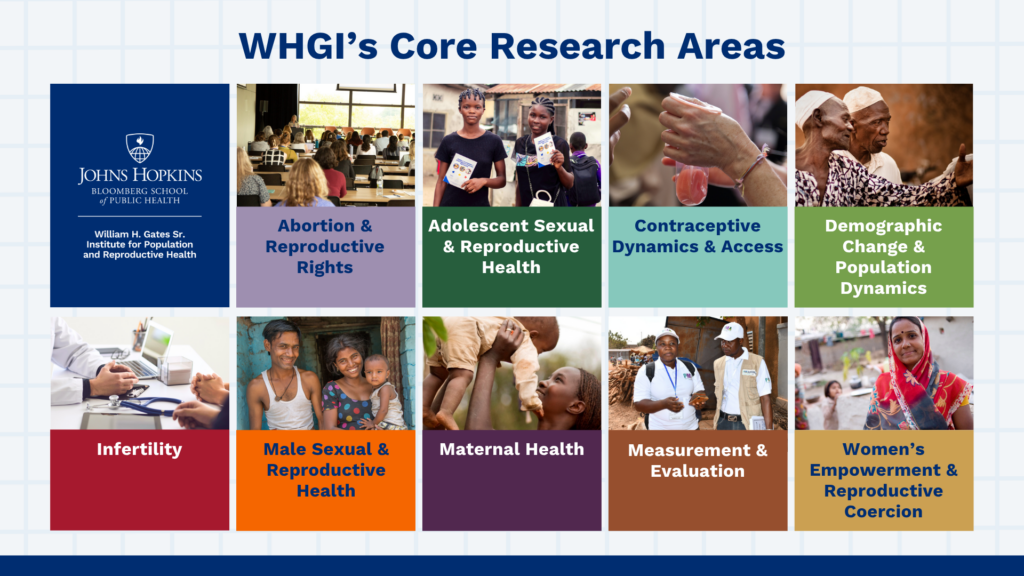
Our newly articulated research areas reflect both the Institute’s history and where we believe population and reproductive health research needs to go next. They encompass longstanding priorities such as contraception, maternal health, adolescent sexual and reproductive health, demographic futures, and abortion, while expanding our attention to areas that have too often remained at the margins of the field, including infertility and male health.
Across these areas, we are also asking deeper questions about people’s reproductive lives. Are people able to achieve their reproductive goals? Do they have meaningful choice and control over their reproductive lives? Are they receiving the care they want? How do their needs and preferences change over time and across different contexts?
Answering these questions requires us to think beyond traditional indicators. At a time when reliable population-based data are becoming increasingly scarce, WHGI is working to develop better measures, strengthen sustainable data systems, and generate timely, high-quality evidence that helps us understand not only what is changing, but why, for whom, and what can be done about it.
As our research agenda evolves, we are evolving in how we communicate our research.
Philip Anglewicz, Director of WHGI
Over the past few months, we have been refreshing WHGI’s digital presence to put our research, researchers, and evidence more prominently at its center. Our website now organizes our work around nine distinct research areas, making it easier to explore our expertise and follow the topics most relevant to you. We have also refreshed our Publications & Resources page, expanded research highlights across the website, and enhanced researcher profiles so visitors can more easily discover new findings, publications, and areas of expertise.
But making research accessible means more than making it easier to navigate a website. We are expanding the ways we translate research beyond academic publications, with more stories that explain new findings, explore their implications, and introduce the researchers behind the work.
We are also thinking about how people find evidence in a rapidly changing information environment. Increasingly, audiences are turning not only to traditional search engines, but to AI-powered tools to find and understand information. We want rigorous, authoritative research from our faculty to be discoverable, understandable, and citable wherever people are looking for answers.
This website refresh is therefore just one part of a broader effort to strengthen how we communicate research and connect evidence with the people who can use it. In the months ahead, you’ll hear from us more regularly about new findings and what they mean for programs, policies, health systems, and the future of population and reproductive health.
I invite you to explore our refreshed research section and learn more about the work underway across the Institute. And as we expand our research communications, we want to hear from you. Select which areas of our research you want to follow so we can bring the evidence and insights most relevant to your work directly to you.
As the demographic, technological, environmental, and financing landscape changes, our goal remains constant: to ask the questions that matter, develop better ways of understanding people’s reproductive lives, and translate rigorous science into meaningful improvements in people’s lives. I hope you will stay connected with us that we can continue investigating the most pressing problems in reproductive health, together.